
Spray Foam Insulation for Sound Control in Murfreesboro, TN
Searchers often look for soundproofing spray foam, but the honest answer is that spray foam can influence sound transmission as one component of an assembly—it is not a complete soundproofing system on its own. Murfreesboro Spray Foam Installation installs spray foam inside interior wall and ceiling assemblies across Murfreesboro and Middle Tennessee for sound-control goals in home offices, bedrooms, workshops, and garages. The full wall, ceiling, floor, and connection design drives the result, not foam alone, and we set realistic expectations rather than promising complete silence.
Tell Us About Your Project
Share your building type and the areas you want insulated. We respond with project guidance.
What Spray Foam Can and Cannot Do for Sound
Spray foam can influence how sound transmits through a wall or ceiling because it fills cavities and seals gaps that would otherwise carry sound. But sound control is not the same as complete soundproofing. Complete soundproofing normally depends on the entire wall, ceiling, floor, and connection design—including mass, decoupling, and air gaps—not on foam alone.
Homeowners in Murfreesboro research spray foam for sound when a home office, bedroom, or workshop needs to be quieter, or when sound between rooms is a concern. Foam in an interior partition can contribute to that goal as one component, but the result depends on the full assembly, not just the foam.
We use accurate terminology—sound control, sound transmission, and acoustic goals—rather than promising soundproof walls or 100% noise reduction. The page targets the search phrase people use while correcting the expectation that foam alone makes a room silent.
No. Spray foam can influence sound transmission as one component of a building assembly, but complete soundproofing normally depends on the entire wall, ceiling, floor, and connection design—including mass, decoupling, and air gaps—not on foam alone.
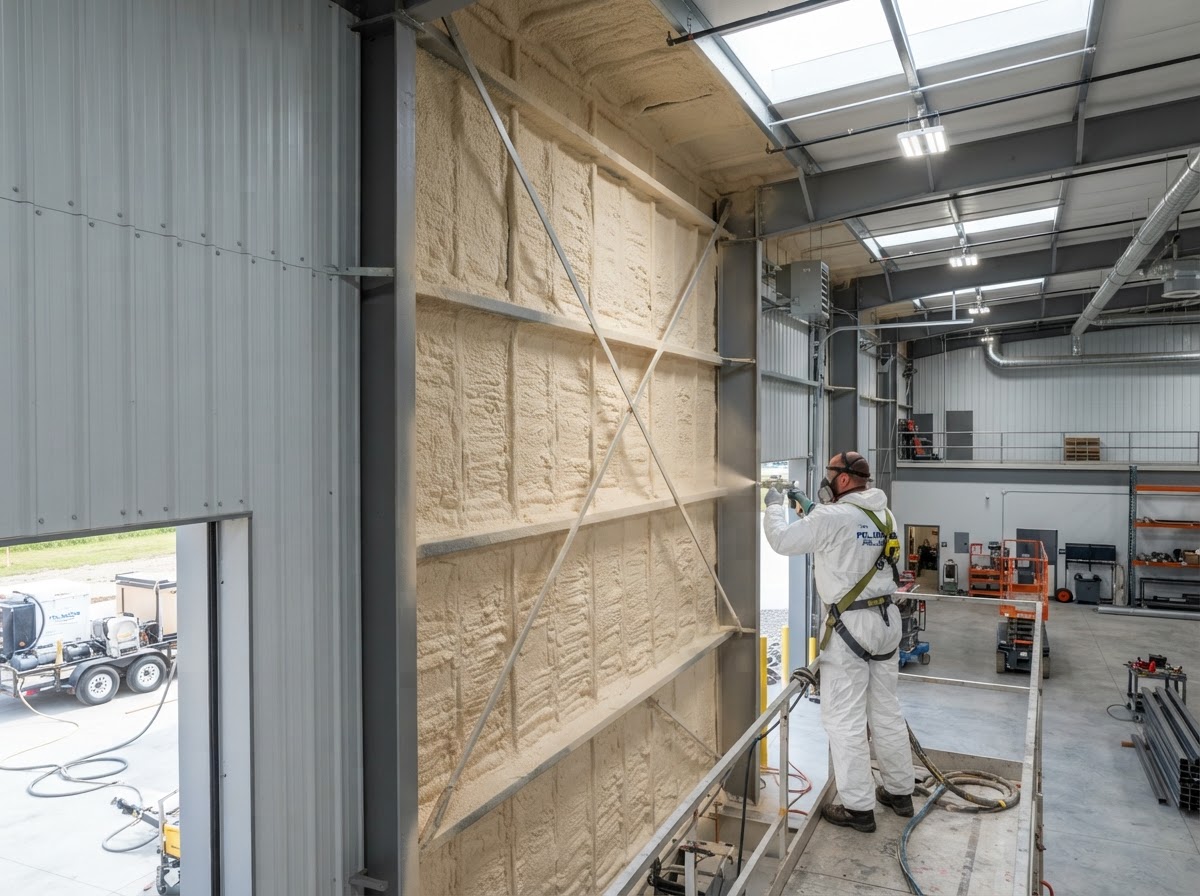
Foam is one component of a sound-control assembly, not a complete system.
Where Sound-Control Foam Is Used
Sound-control foam goes inside interior assemblies. These are the spaces most often evaluated for Murfreesboro homes.
Interior Wall Assemblies
Foam inside an interior partition wall fills the cavity and seals gaps that would otherwise carry sound between rooms.
Ceiling Assemblies
Foam in a ceiling between floors can influence sound transmission from the level above or below.
Home Offices
A home office needing quiet uses foam as part of the partition assembly, with the full wall design driving the result.
Bedrooms
Bedrooms adjacent to living areas use foam to influence sound between rooms, set by the assembly and the goal.
Workshops
Workshops use foam as part of the envelope, with the building's use and ventilation planned alongside any sound goal.
Garages
Garages sharing a wall with living space use foam as one component of the separation assembly, not as complete soundproofing.
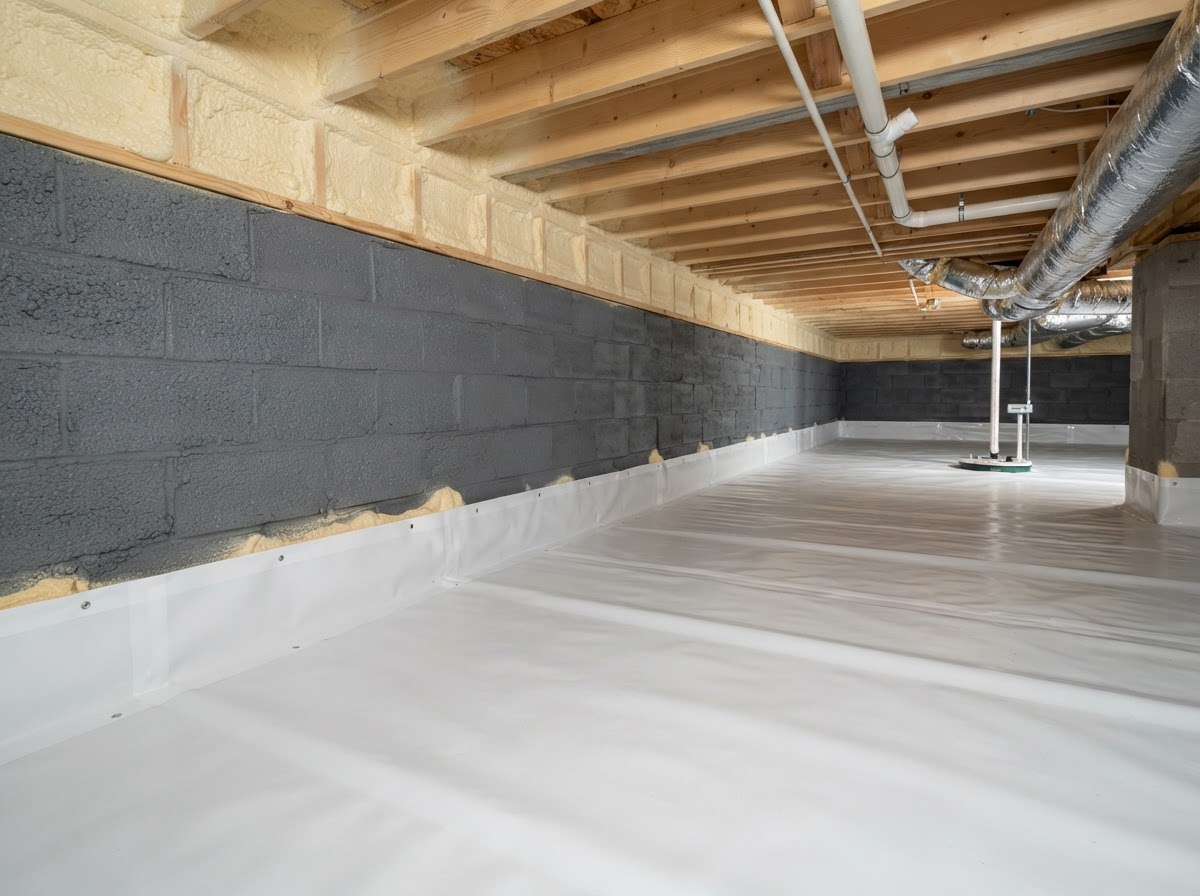
Foam Type & Sound-Control Considerations
Open-cell foam is often considered for sound-control applications because its softer, expanding structure can fill a cavity fully and absorb within the assembly. Closed-cell is denser and is less commonly the first choice for sound goals, though it may be considered where the assembly also needs moisture tolerance. The assembly and the goal drive the choice.
The key limitation to understand is that foam is one component, not the whole system. Complete soundproofing depends on the entire wall, ceiling, floor, and connection design—mass, decoupling, and air gaps all matter. We set realistic expectations for what foam can contribute to sound control.
| Consideration | Open-Cell Foam | Closed-Cell Foam |
|---|---|---|
| Cavity Fill | Expands to fill cavity | Dense fill, less expansion |
| Sound Goal | Often considered for sound | Less common first choice |
| Moisture Tolerance | Standard | Higher moisture tolerance |
| Complete Soundproofing | Not on its own | Not on its own |
| Selection Driver | Cavity fill, acoustic goal | Assembly also needs moisture plan |
General sound-control considerations; foam is one component of a complete assembly.
Insulation Is Not the Same as Soundproofing
Insulation and soundproofing are different goals. Spray foam can influence sound transmission as one component of an assembly, but complete soundproofing depends on the full wall, ceiling, floor, and connection design. We do not promise complete silence or soundproof walls.
Planning a Sound-Control Project in Murfreesboro
Sound-control projects in Murfreesboro often involve home offices, bedrooms, workshops, or garages where noise between spaces is a concern. Because foam is one component, the conversation starts with the assembly and the acoustic goal. Murfreesboro Spray Foam Installation reviews the wall or ceiling and outlines where foam fits in the sound-control strategy.
The evaluation reviews the assembly, the cavity depth, and whether the structure is new or being remodeled. From there we outline where foam contributes to the sound-control goal and set realistic expectations for the result.
Discuss the space—home office, bedroom, workshop, or garage—and the acoustic goal.
Review the wall or ceiling assembly and the cavity depth available.
Note whether the structure is new or being remodeled, which affects access.
Outline where foam fits in the sound-control strategy and set realistic expectations.
Part of Residential Spray Foam Insulation
Related Spray Foam Services
Spray Foam for Sound Control FAQs
Not completely. Spray foam can influence how sound transmits through a wall by filling the cavity and sealing gaps, but complete soundproofing depends on the full wall design—mass, decoupling, and air gaps—not on foam alone.
Ready to Discuss a Sound-Control Project in Murfreesboro?
Tell us about the space and the acoustic goal. We review the wall or ceiling assembly, outline where spray foam fits in the sound-control strategy, and set realistic expectations for the result.