
Shipping Container Spray Foam Insulation in Murfreesboro, TN
A shipping container is a corrugated steel box with limited interior space, and insulating one is a specialized metal-surface application. Murfreesboro Spray Foam Installation insulates shipping containers across Murfreesboro and Middle Tennessee, from storage units to container workshops, offices, and tiny-building conversions. Because the interior is small and the walls are steel, foam selection follows the limited cavity space and the condensation strategy—closed-cell is commonly considered for direct adhesion to the corrugated metal. A converted container does not automatically comply with residential codes.
Tell Us About Your Project
Share your building type and the areas you want insulated. We respond with project guidance.
What Shipping Container Spray Foam Addresses
A shipping container is a corrugated steel structure originally built for freight, and when repurposed for storage, workshops, offices, or living space, its metal walls and ceiling need insulation. Container spray foam is polyurethane foam applied directly to the interior corrugated steel to manage temperature and condensation across the small interior. The corrugated profile and tight interior shape the plan.
Owners in Murfreesboro research container insulation when converting a container into a workshop, office, or small building, or when stored contents need protection from heat and condensation. The approach follows the metal surfaces, the limited interior clearance, and how the container will be used.
A converted container does not automatically comply with residential codes. Whether a container workshop, office, or dwelling meets code is a separate question from insulating it, and we do not imply that insulating a container makes it code-compliant. Foam addresses the thermal and condensation side of the envelope.
Yes. Closed-cell spray foam can be applied directly to the corrugated steel walls and ceiling of a shipping container, adhering to the metal and managing temperature and condensation. The tight interior space and the container's intended use drive the approach, and a converted container does not automatically comply with residential codes.
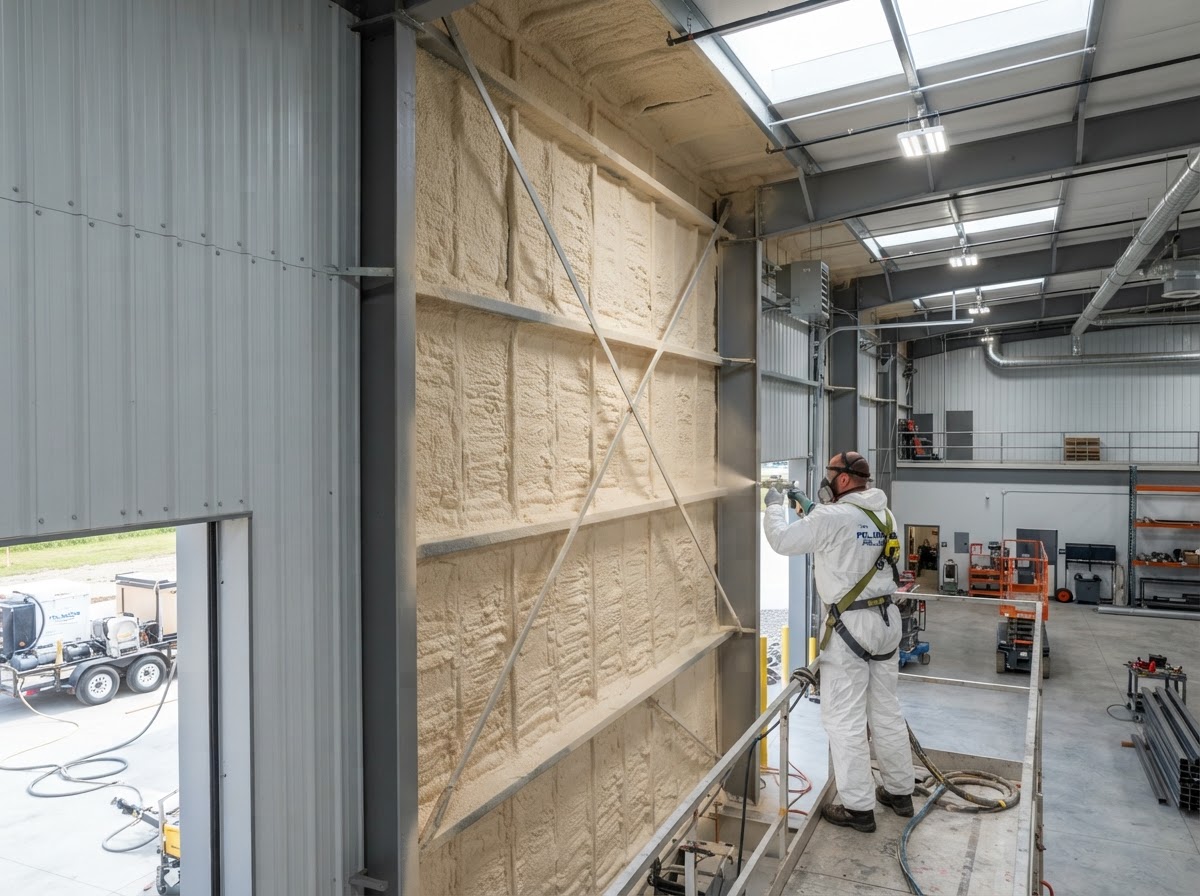
Foam adheres directly to corrugated container steel.
Where Container Foam Is Used
A shipping container has a defined set of metal surfaces. These are the applications most often evaluated for Murfreesboro containers.
Container Walls
Foam on the corrugated container walls manages heat and condensation across the steel sides of the structure.
Container Ceiling / Roof
The container roof is a major condensation surface; foam on the ceiling addresses the heat that collects at the top of the box.
Container Workshops
Containers used as workshops use foam across the envelope, with ventilation planned separately for any fumes or combustion.
Container Storage
Storage containers use foam to protect contents from heat and the condensation that forms on bare steel.
Container Offices
Container offices use foam as part of a conditioned envelope, with the small interior shaping how much clearance remains.
Tiny-Building Conversions
Containers converted into small buildings use foam for the envelope, separate from any residential code questions.
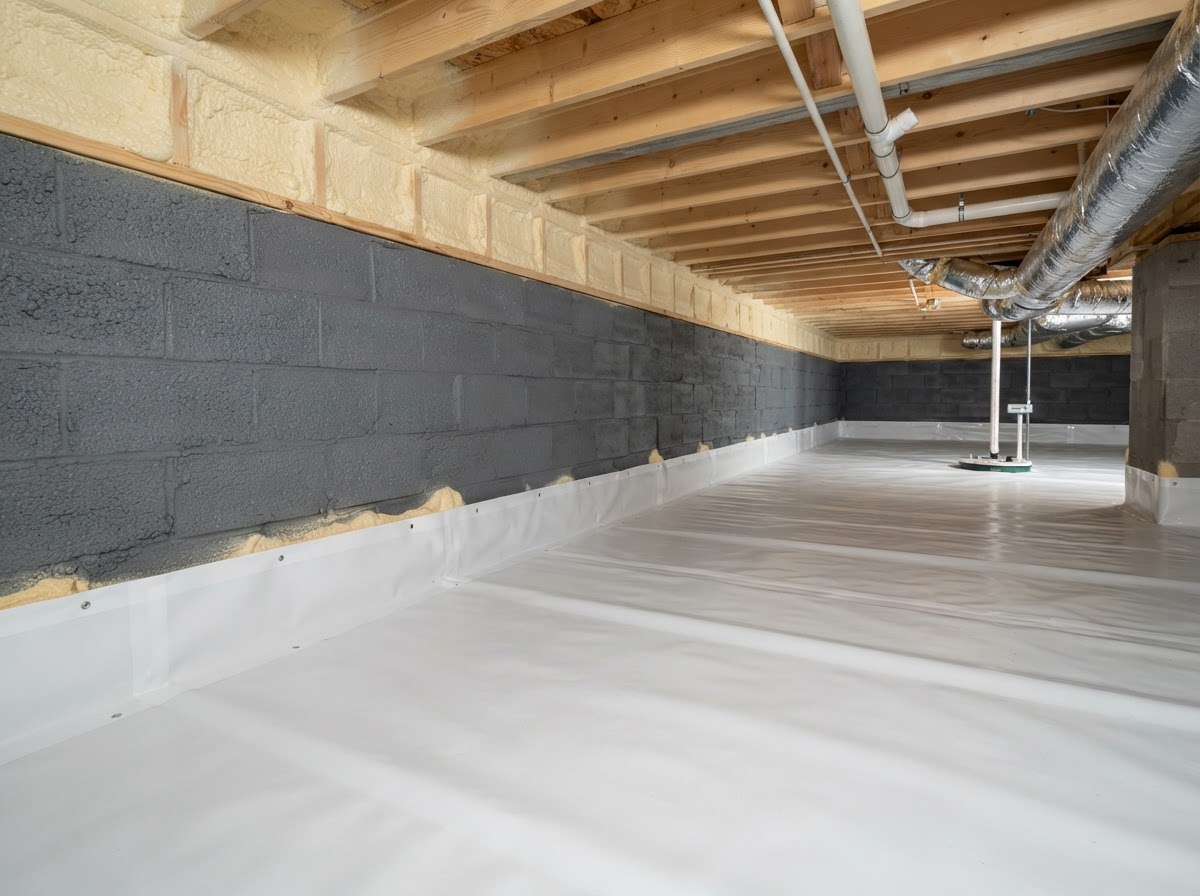
Foam Type & Container Considerations
Closed-cell foam is commonly considered for shipping containers because it adheres directly to corrugated steel and delivers thermal resistance in a thin layer—important when interior clearance is tight. Open-cell expands more and eats into the limited interior space, so it is less common for direct-to-steel container use. The limited cavity space and the metal surface drive the choice.
Condensation is the key driver on a steel container, since bare metal sweats when interior air is warmer and humid than the steel. Foam can contribute to a condensation strategy as part of the envelope, but it does not prevent all condensation in every condition—ventilation and interior moisture are also factors. We set realistic expectations for the container envelope.
| Consideration | Open-Cell Foam | Closed-Cell Foam |
|---|---|---|
| Direct to Steel | Less common, expands large | Direct adhesion to corrugated steel |
| Interior Clearance | Reduces usable space | Thin layer preserves space |
| Condensation | Limited condensation role | Contributes to condensation strategy |
| Workshop / Fumes | Ventilation planned separately | Ventilation planned separately |
| Selection Driver | Rarely first choice | Metal surfaces, tight space |
General container considerations; foam depends on interior space, metal surfaces, and condensation strategy.
Not Code-Compliant by Default
A converted container does not automatically comply with residential codes. Whether a container workshop, office, or dwelling meets code is a separate question from insulating it. Foam addresses the thermal and condensation side of the envelope, not the building-code status of the conversion.
Planning a Container Project in Murfreesboro
Shipping containers are increasingly used across Murfreesboro and Middle Tennessee for storage, workshops, offices, and small-building conversions. Because the interior is tight and the walls are steel, the conversation starts with how the container will be used and how much interior clearance can be given up to insulation. Murfreesboro Spray Foam Installation then reviews the metal surfaces and outlines a foam approach.
The evaluation reviews the corrugated walls and ceiling, the condensation strategy, and any ventilation needs for the container's use. From there we outline a wall, ceiling, or full-envelope foam approach that fits the container and its intended use.
Discuss how the container will be used—storage, workshop, office, or conversion.
Review the corrugated walls and ceiling and how much interior clearance is available.
Note the condensation strategy and any ventilation needs for the container's use.
Recommend a wall, ceiling, or full-envelope foam approach for the steel structure.
Part of Metal Building Spray Foam Insulation
Related Spray Foam Services
Shipping Container Spray Foam FAQs
Yes. Closed-cell foam adheres directly to the corrugated steel walls and ceiling of a container, managing temperature and condensation. The tight interior and the container's intended use drive the approach.
Ready to Insulate a Shipping Container in Murfreesboro?
Tell us how your container will be used and how much interior clearance is available. We review the corrugated metal surfaces and outline an appropriate spray foam approach for the structure.