
Basement Spray Foam Insulation in Murfreesboro, TN
Basement spray foam addresses the wall assemblies and rim joists that sit below grade, where cool foundation walls and perimeter framing drive comfort and air-leakage concerns. Murfreesboro Spray Foam Installation insulates basements across Murfreesboro and Rutherford County, from unfinished rim joists to framed walls planned during a remodel. Moisture is evaluated independently—spray foam is not a fix for foundation leaks, groundwater intrusion, or drainage problems, and any bulk-water issues must be handled before insulation is part of the strategy.
Tell Us About Your Project
Share your building type and the areas you want insulated. We respond with project guidance.
What Basement Spray Foam Addresses
A basement sits below grade, so its walls are foundation assemblies that lose heat to the surrounding earth and rim joists that leak air at the floor perimeter above. Basement spray foam is polyurethane foam applied to those wall assemblies and rim joists to manage temperature and air leakage below the main living level. The approach depends on whether the basement is unfinished or being finished.
Homeowners in Murfreesboro research basement insulation when finishing a basement, when the rim joists leak air, or when an unfinished basement's perimeter framing is exposed. Unfinished basements allow clean access to rim joists and foundation walls; finished basements require planning around stud walls and the intended use of the space.
Moisture is the defining caveat. Spray foam is not a fix for foundation leaks, groundwater intrusion, drainage problems, or active bulk-water leaks. Any water issues at the foundation are evaluated and handled separately before insulation becomes part of the basement envelope strategy.
Yes. Spray foam can be applied to basement wall assemblies and rim joists to manage temperature and air leakage below grade. However, spray foam is not a fix for foundation leaks, groundwater, or drainage problems—those must be evaluated and handled separately before insulation is part of the strategy.
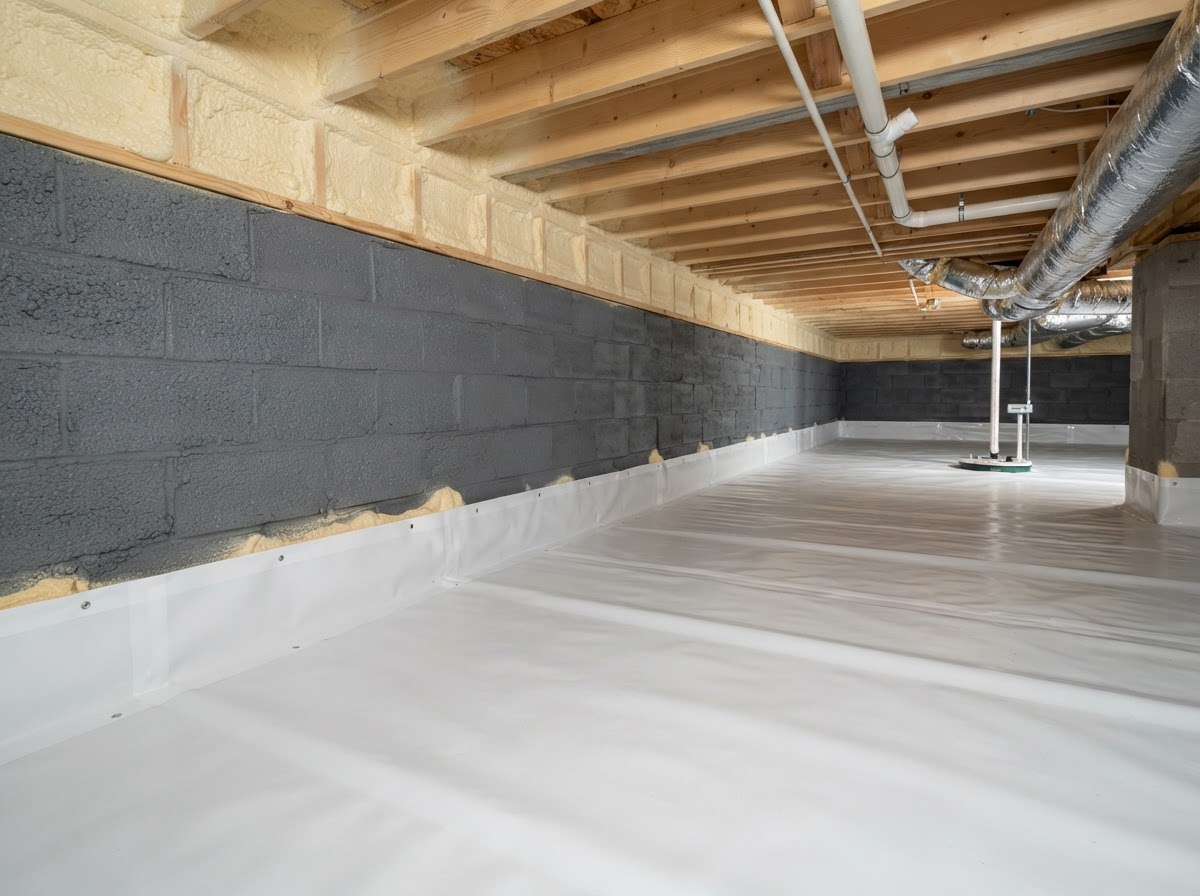
Basement rim joists and wall assemblies sit below grade.
Where Basement Foam Is Used
A basement has a distinct set of below-grade surfaces. These are the areas most often evaluated for Murfreesboro homes.
Basement Rim Joists
The perimeter framing on top of the foundation wall is a major air-leakage path and a common retrofit target in unfinished basements.
Framed Basement Walls
Stud walls built inside the foundation are insulated when a basement is being finished, with foam in the stud cavities.
Foundation Wall Assemblies
Foundation walls are addressed as part of the below-grade envelope, with the approach set by whether the basement is conditioned.
Unfinished Basements
Unfinished basements allow clean access to rim joists and walls, making them a practical place to add foam.
Finished Basement Planning
Finished basements require planning around stud walls, with foam applied before drywall during a remodel.
Remodel Coordination
A basement remodel coordinates foam with framing, electrical, and mechanical work before the interior finishes go in.
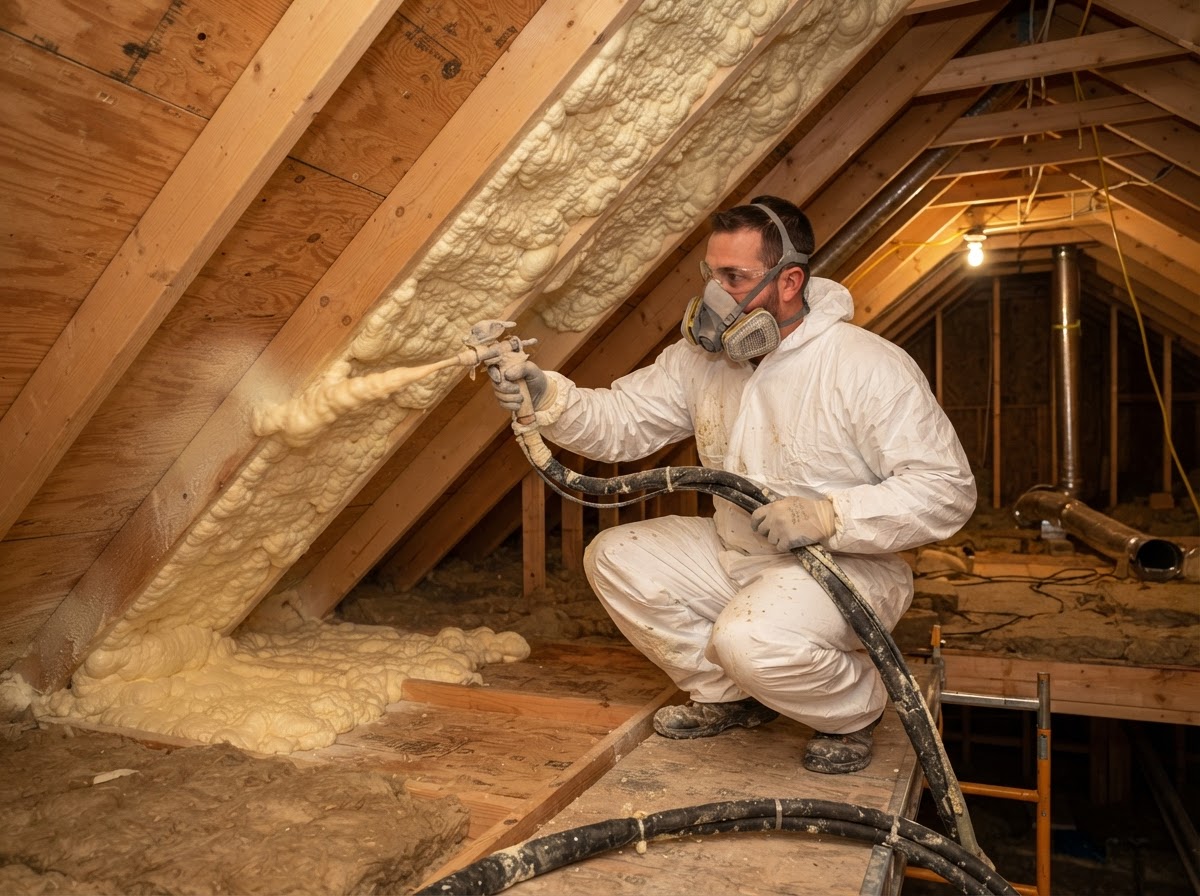
Foam Type & Basement Considerations
For basement rim joists, closed-cell is frequently considered because the cavity is shallow and the location borders the foundation, where air leakage and some moisture are concerns. For framed basement walls, open-cell or closed-cell may be considered based on cavity depth and whether the basement is conditioned. The assembly and conditioning goals drive the choice.
Existing insulation in rim joist cavities or wall framing is reviewed before application. Damaged or moisture-affected material may need removal, while intact material may remain. Most importantly, any foundation moisture or bulk-water issue is evaluated and handled separately—we do not imply foam solves water problems.
| Consideration | Open-Cell Foam | Closed-Cell Foam |
|---|---|---|
| Rim Joists | Deeper cavities | Shallow cavity, air leakage |
| Framed Walls | Deeper stud cavities | Shallow or moisture-prone |
| Conditioned Basement | Fuller envelope with HVAC | Fuller envelope with HVAC |
| Moisture Concerns | Handled separately | Handled separately |
| Selection Driver | Depth, conditioning | Shallow cavities, air leakage |
General basement considerations; foam depends on assembly, conditioning, and moisture status.
Moisture Is Evaluated Separately
Spray foam is not a fix for foundation leaks, groundwater intrusion, drainage problems, or active bulk-water leaks. Any water issue at the foundation is evaluated and handled separately before insulation becomes part of the basement envelope strategy.
Planning a Basement Project in Murfreesboro
Basements are common in Murfreesboro and Rutherford County, and their below-grade walls and rim joists are frequent insulation targets—especially when a basement is being finished. The conversation starts with whether the basement is unfinished or being remodeled and whether any moisture is present. Murfreesboro Spray Foam Installation then reviews the wall assemblies and rim joists and outlines an approach.
The evaluation reviews cavity depth, existing insulation, and—critically—whether the foundation has any moisture or bulk-water issues that must be handled separately. From there we outline a rim joist, wall, or full-envelope foam approach that fits the basement.
Discuss whether the basement is unfinished or being finished and whether any moisture is present.
Review rim joist cavities, framed walls, and existing insulation.
Note any foundation water or drainage issues to be handled separately from the insulation.
Apply foam to the appropriate below-grade assemblies and review coverage.
Part of Residential Spray Foam Insulation
Related Spray Foam Services
Basement Spray Foam FAQs
Yes. Foam can be applied to basement wall assemblies and rim joists to manage temperature and air leakage below grade. It is not a fix for foundation leaks, groundwater, or drainage problems—those must be handled separately.
Ready to Discuss a Basement Project in Murfreesboro?
Tell us whether your basement is unfinished or being finished and whether any moisture is present. We review the wall assemblies and rim joists and outline an appropriate spray foam approach.