Roof Deck & Unvented Attic Spray Foam Insulation in Murfreesboro, TN
Roof deck spray foam is polyurethane foam applied directly to the underside of the roof deck, moving the thermal boundary from the attic floor up to the roofline. Murfreesboro Spray Foam Installation handles roof-deck applications and unvented attic assemblies across Murfreesboro and Rutherford County, where hot, humid summers make a conditioned attic an attractive option for homes with HVAC equipment or ductwork overhead. This is a specific approach within attic insulation—not every attic should be converted to an unvented attic. The roof assembly determines whether a roof-deck application is appropriate.
Tell Us About Your Project
Share your building type and the areas you want insulated. We respond with project guidance.
What Roof Deck Spray Foam Does
Roof deck spray foam changes where the home's thermal boundary sits. Instead of insulating the attic floor—which keeps the attic outside the home's envelope—foam is applied to the underside of the roof deck, bringing the attic inside the conditioned space. That brings HVAC equipment and ductwork located in the attic inside the thermal envelope, which is why homeowners with attic ductwork often research this approach.
An unvented attic is a related concept: a roof-deck application that seals the attic from outside air, turning a vented attic into a sealed, conditioned assembly. But a roof-deck approach is not the right fit for every home. It depends on the roof assembly—rafter depth, ventilation design, and roof construction—not on a universal preference for unvented attics.
This page sits beneath our broader attic spray foam service because roof-deck work is one specific attic strategy. Where the attic floor may be the better choice for some homes, the roof deck is the focus when ductwork, equipment, or a conditioned attic is the goal.
Roof deck spray foam is polyurethane foam applied to the underside of the roof deck, moving the thermal boundary from the attic floor up to the roofline. It can bring attic ductwork and equipment inside the conditioned space, but it depends on the roof assembly—not every attic should be converted to an unvented attic.
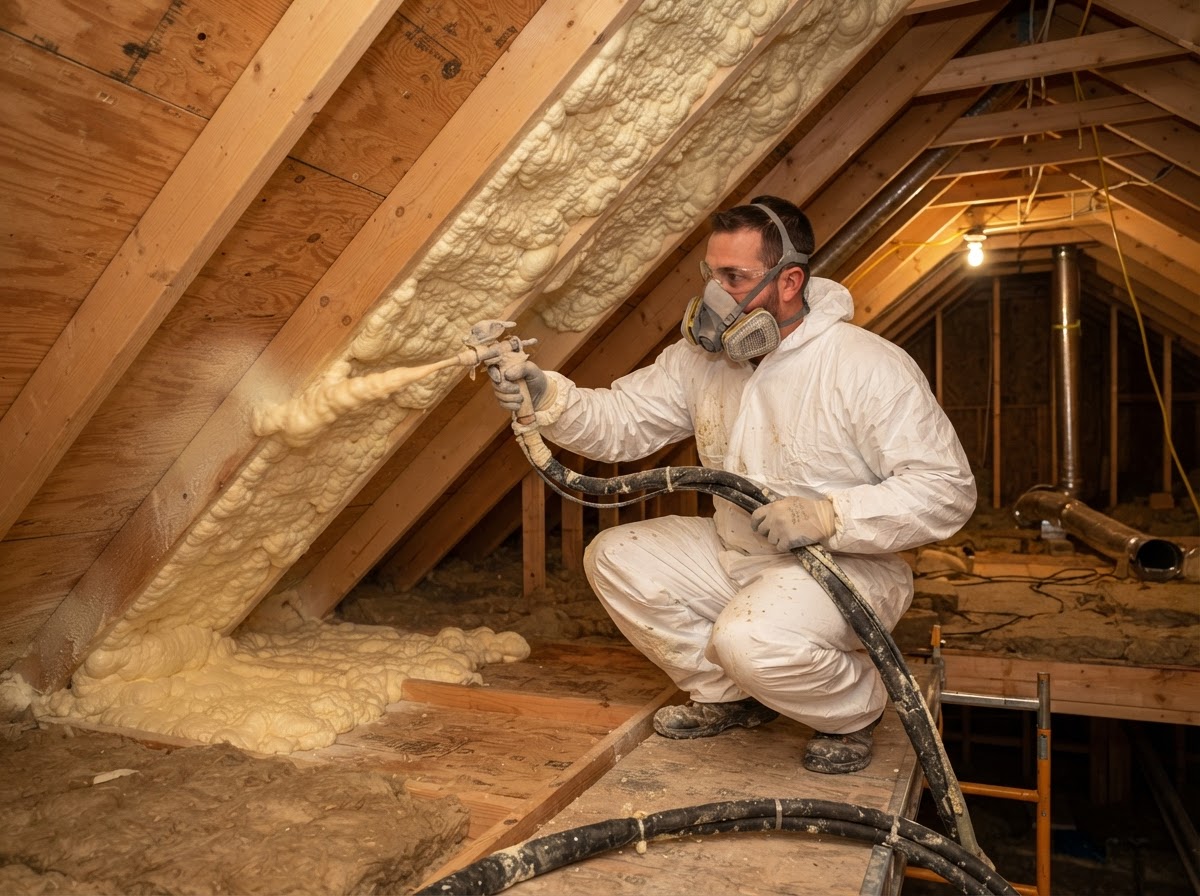
Roof-deck foam moves the thermal boundary to the roofline.
Where Roof Deck Foam Is Used
Roof-deck work centers on the roofline. These are the situations most often evaluated for Murfreesboro homes.
Conditioned Attic Assemblies
Foam at the roof deck brings the attic inside the conditioned space, which can change how attic HVAC equipment and ductwork operate.
HVAC Ductwork in the Attic
Homes with ductwork overhead are a common driver for roof-deck foam, since bringing ducts inside the conditioned zone changes the load on the system.
Unvented Attic Conversions
A vented attic can sometimes be converted to an unvented assembly, depending on the roof construction and ventilation design.
Existing vs. New Construction
New construction lets roof-deck foam be planned into the roof design; existing homes require evaluating the roof assembly first.
Roof Assembly Review
Rafter depth, ventilation, and roof construction are reviewed before a roof-deck approach is recommended, since not every roof supports it.
Attic Floor Alternative
When a roof-deck approach is not appropriate, sealing the attic floor remains an option and is evaluated against the roof-deck strategy.
Foam Type & Roof Assembly Considerations
For roof-deck applications, open-cell foam is frequently considered where the rafter depth is generous and a vapor-open roof assembly is appropriate. Closed-cell may be considered where rafter depth is limited or where a denser, moisture-tolerant layer is wanted. The roof assembly—not a default preference—drives the choice between them.
The most important consideration is whether the roof supports an unvented design. Not every roof assembly can be converted, and not every attic should be. We evaluate the roof construction, rafter depth, and ventilation design before recommending a roof-deck approach rather than assuming an unvented attic is always the answer.
| Consideration | Open-Cell Foam | Closed-Cell Foam |
|---|---|---|
| Rafter Depth | Needs generous depth | Fits shallower rafters |
| Roof Assembly | Vapor-open unvented design | Moisture-tolerant assembly |
| Ductwork Benefit | Brings ducts into conditioned space | Brings ducts into conditioned space |
| Conversion Risk | Roof must support unvented design | Roof must support unvented design |
| Selection Driver | Depth, vapor-open roof design | Limited depth, moisture strategy |
General roof-deck considerations; foam type depends on the evaluated roof assembly, rafter depth, and ventilation design.
Not Every Attic Should Be Unvented
A roof-deck approach depends on the roof assembly, not on a universal preference for unvented attics. We evaluate the roof construction, rafter depth, and ventilation design before recommending a roof-deck strategy, and the attic floor remains an alternative where appropriate.
Planning a Roof Deck Project in Murfreesboro
Murfreesboro's hot, humid summers put real stress on vented attics, which is why roof-deck foam is one of the most requested attic strategies for homes with ductwork overhead. But the roof assembly has to support the approach. Murfreesboro Spray Foam Installation evaluates the roof construction, rafter depth, and ventilation design before recommending a roof-deck application.
The conversation starts with the home's roof type and whether HVAC equipment or ductwork sits in the attic. From there we review the roof assembly and outline whether a roof-deck or attic-floor approach fits, and which foam is appropriate for that location.
Discuss the home's roof type and whether HVAC equipment or ductwork is in the attic.
Review the roof assembly—rafter depth, ventilation design, and existing insulation.
Determine whether a roof-deck or attic-floor approach fits the roof construction.
Apply open-cell or closed-cell foam to the appropriate location and review coverage.
Part of Attic Spray Foam Insulation
Related Spray Foam Services
Roof Deck & Unvented Attic Spray Foam FAQs
It is polyurethane foam applied to the underside of the roof deck, moving the thermal boundary from the attic floor up to the roofline. It can bring attic ductwork inside the conditioned space, but it depends on the roof assembly—not every attic should be converted.
Ready to Discuss a Roof Deck Project in Murfreesboro?
Tell us about your home's roof type and whether HVAC equipment or ductwork runs through the attic. We review the roof assembly and outline an appropriate roof-deck spray foam approach.