
Cabin & Tiny Home Spray Foam Insulation in Murfreesboro, TN
Cabins and tiny homes are compact structures with small wall cavities, shallow roof assemblies, and limited space, and their scale makes foam selection especially important. Murfreesboro Spray Foam Installation insulates cabins and tiny homes across Murfreesboro and rural Middle Tennessee, from new builds to existing cabins. Because the cavities are small and the envelope is tight, the choice between open-cell and closed-cell depends on cavity depth, the assembly, and how the small space will be used—there is no one universal foam type for tiny homes.
Tell Us About Your Project
Share your building type and the areas you want insulated. We respond with project guidance.
What Cabin & Tiny Home Spray Foam Addresses
A cabin or tiny home is a small residential structure with compact wall cavities, a shallow roof assembly, and often a floor system close to the ground. Spray foam in these buildings fills the small cavities to manage temperature and air leakage across the tight envelope. The compact scale means every cavity decision matters more than in a large home.
Builders and owners in Murfreesboro research cabin and tiny home insulation when constructing a new small structure, when an existing cabin needs a retrofit, or when a compact building's shallow roof leaves little room for insulation. The approach depends on cavity depth, the assembly, and the building's use—there is no universal foam type for tiny homes.
Mechanical and ventilation planning is part of the picture for a tight envelope. A small, well-sealed structure needs air and moisture managed thoughtfully, and we discuss ventilation alongside the insulation rather than implying the envelope alone handles it.
Yes. Spray foam can be used in a tiny home's wall, roof, and floor assemblies to manage temperature and air leakage across the compact envelope. The choice between open-cell and closed-cell depends on cavity depth, the assembly, and the building's use—there is no one universal foam type for tiny homes.
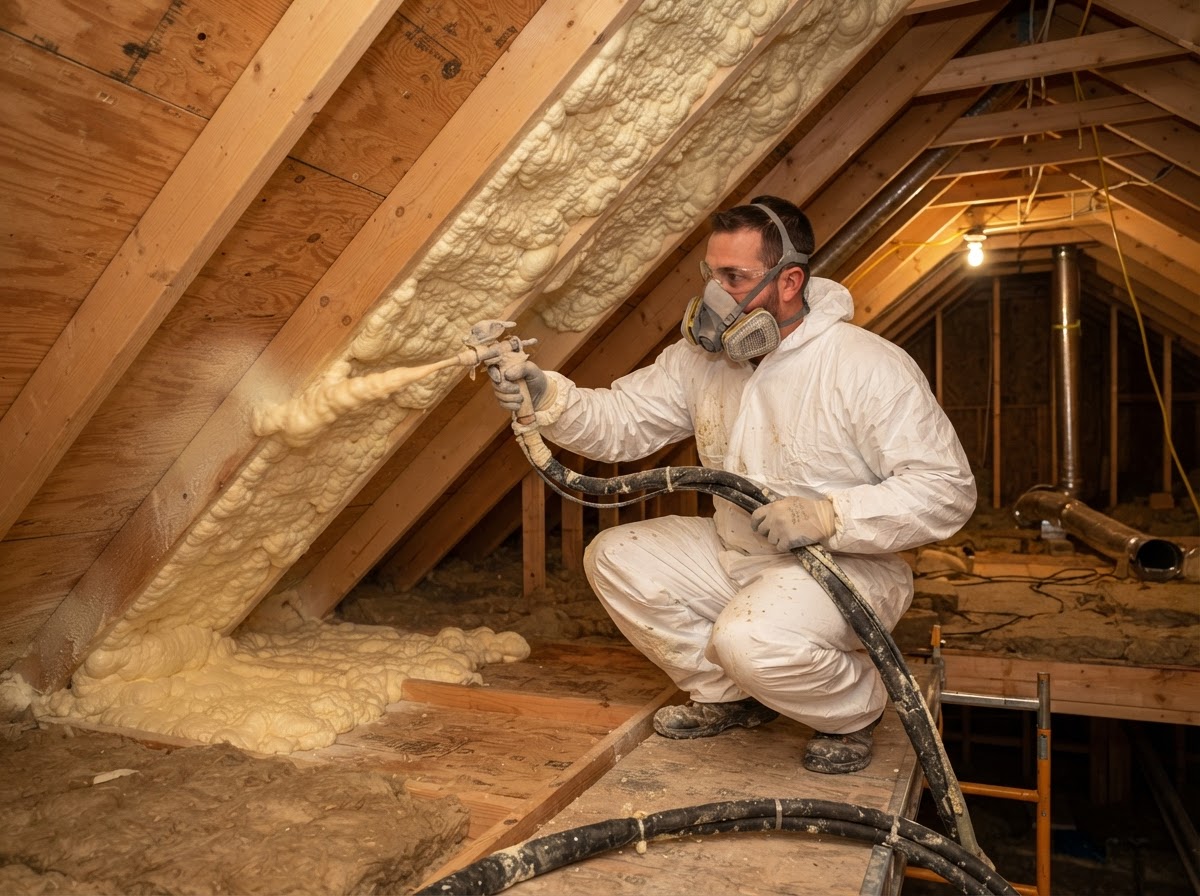
Compact cavities make foam selection especially important.
Where Cabin & Tiny Home Foam Is Used
A cabin or tiny home has small, defined cavities. These are the areas most often evaluated for Murfreesboro builds.
Small Wall Cavities
Foam in compact wall cavities manages the envelope where shallow stud depth leaves little room for thick insulation.
Roof Assemblies
Shallow roof framing in a cabin or tiny home is insulated at the roofline, where limited rafter depth shapes the foam choice.
Floor Systems
Floor assemblies close to the ground are insulated where access allows, sealing the underside of the compact structure.
New Construction
New cabins and tiny homes plan foam into the framing before finishes, letting the envelope be designed from the start.
Existing Cabins
Existing cabins can sometimes be retrofitted depending on access to the wall, roof, and floor cavities.
Limited Cavity Depth
Shallow cavities often point toward a denser foam where depth is limited, since the envelope has little room to work with.
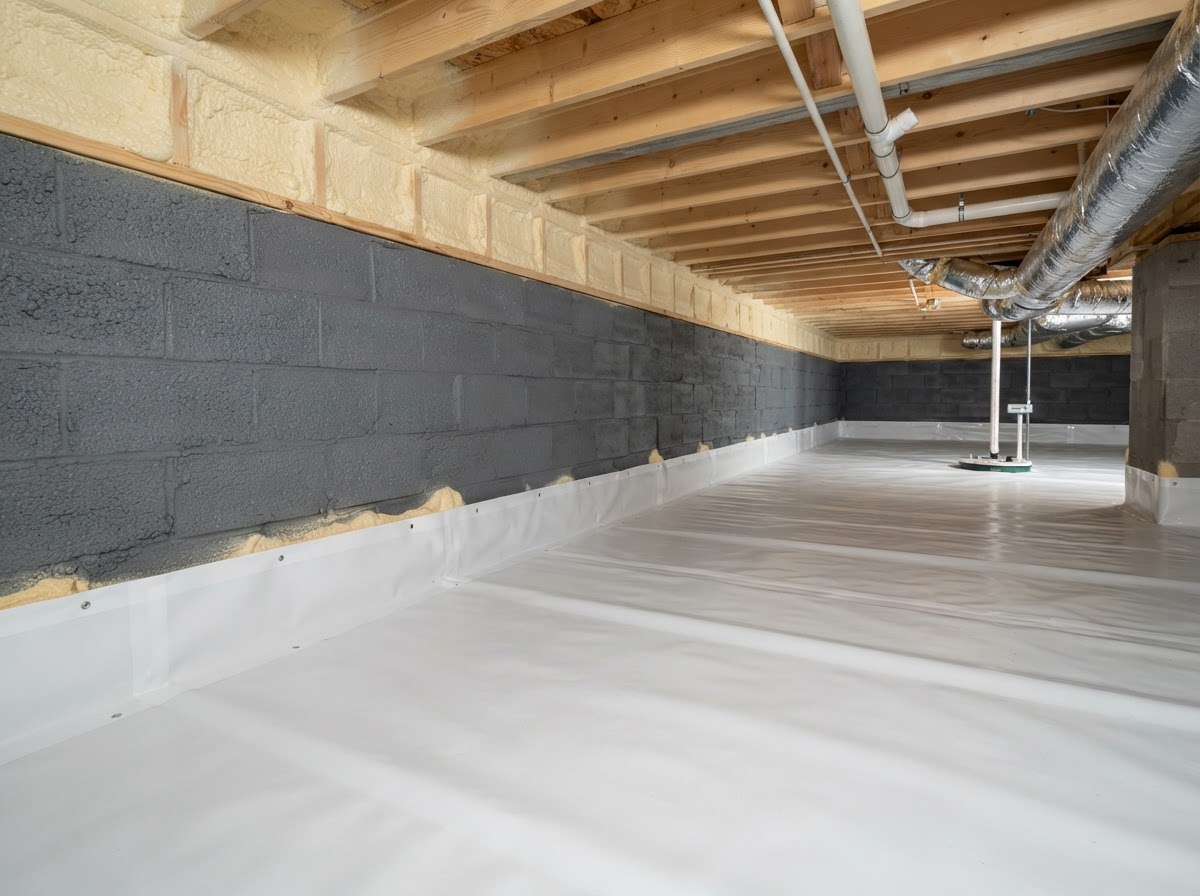
Foam Type & Compact-Build Considerations
For small wall cavities and shallow roofs, closed-cell is often considered where cavity depth is limited, since it delivers thermal resistance in a thinner layer. Open-cell may be considered where the cavity is deeper and expansion is useful. The cavity depth and the assembly—not a default—drive the choice, and no single foam type is universal for tiny homes.
Ventilation planning matters in a tight envelope. A small, well-sealed structure needs air and moisture managed thoughtfully, and we discuss ventilation alongside the insulation rather than implying the envelope alone handles indoor air quality.
| Consideration | Open-Cell Foam | Closed-Cell Foam |
|---|---|---|
| Shallow Cavity | Needs depth to expand | Thin layer, limited depth |
| Deeper Cavity | Expands to fill cavity | Dense layer if moisture-prone |
| Roof Assembly | Deeper rafters only | Shallow rafter cavities |
| Ventilation | Planned alongside insulation | Planned alongside insulation |
| Selection Driver | Depth, vapor-open assembly | Limited depth, tight envelope |
General cabin and tiny home considerations; foam depends on cavity depth, assembly, and ventilation.
No Universal Foam for Tiny Homes
There is no one universal foam type for tiny homes. The choice between open-cell and closed-cell depends on cavity depth, the assembly, and the building's use. A shallow roof may point one way; a deeper wall may point another. We evaluate the structure rather than defaulting to a single product.
Planning a Cabin or Tiny Home Project in Murfreesboro
Cabins and tiny homes are common across rural Murfreesboro and Middle Tennessee, built as full-time residences, weekend retreats, and accessory structures. Because the cavities are small, the conversation starts with the building's construction and cavity depth. Murfreesboro Spray Foam Installation then reviews the wall, roof, and floor assemblies and outlines a foam approach.
The evaluation reviews cavity depth, the assembly, and ventilation needs for the tight envelope. From there we outline a wall, roof, or floor foam approach that fits the compact structure and its intended use.
Discuss the cabin or tiny home—new build or existing—and how it will be used.
Review the wall, roof, and floor cavity depths and the assemblies.
Note ventilation needs for the tight envelope and how they fit the plan.
Recommend a foam approach suited to the compact cavities and the building's use.
Part of Residential Spray Foam Insulation
Related Spray Foam Services
Cabin & Tiny Home Spray Foam FAQs
Yes. Foam can be used in a tiny home's wall, roof, and floor assemblies to manage temperature and air leakage. The choice between open-cell and closed-cell depends on cavity depth and the assembly—there is no universal foam type for tiny homes.
Ready to Insulate a Cabin or Tiny Home in Murfreesboro?
Tell us about your cabin or tiny home—new build or existing—and its cavity depths. We review the wall, roof, and floor assemblies and outline an appropriate spray foam approach for the compact structure.