New Construction Spray Foam Insulation in Murfreesboro, TN
New construction is the ideal stage for spray foam insulation—framing bays, exterior sheathing, and roof decks are fully exposed before drywall, so coverage can be verified across wall cavities, rim joists, top plates, and rooflines in a single coordinated application. Murfreesboro Spray Foam Installation insulates new homes, custom builds, commercial construction, shops, garages, and barndominiums across Murfreesboro and Middle Tennessee. We coordinate with builders, contractors, and developers so spray foam fits the construction sequence—after rough-ins, before finishes—rather than disrupting it.
Tell Us About Your Project
Share your building type and the areas you want insulated. We respond with project guidance.
Spray Foam Installed During New Construction
During new construction, the building envelope is completely accessible—wall studs, roof rafters, rim joists, and top plates are all exposed before drywall and interior finishes go in. That access is what makes framing-stage spray foam so effective: the foam can be applied and verified across the entire envelope in one coordinated step, sealing the gaps and penetrations that are difficult to reach once the building is enclosed.
Builders, homeowners, and developers in Murfreesboro typically plan spray foam during new construction to establish a tight envelope from the start, to coordinate with mechanical and electrical rough-ins, or to insulate a custom home, barndominium, shop, or commercial build. The approach depends on the building type, the assembly design, and the construction timeline.
We do not give rigid sequencing that could conflict with an individual project's requirements. The general flow—after framing and sheathing, after rough-ins, before drywall—is adjusted to each build, and the foam type is matched to each assembly within the building.
Spray foam is typically installed during new construction after framing and sheathing are complete and after mechanical and electrical rough-ins, but before interior finishes like drywall. Exact timing is coordinated with the build schedule and adjusted to each project rather than set to a rigid sequence.
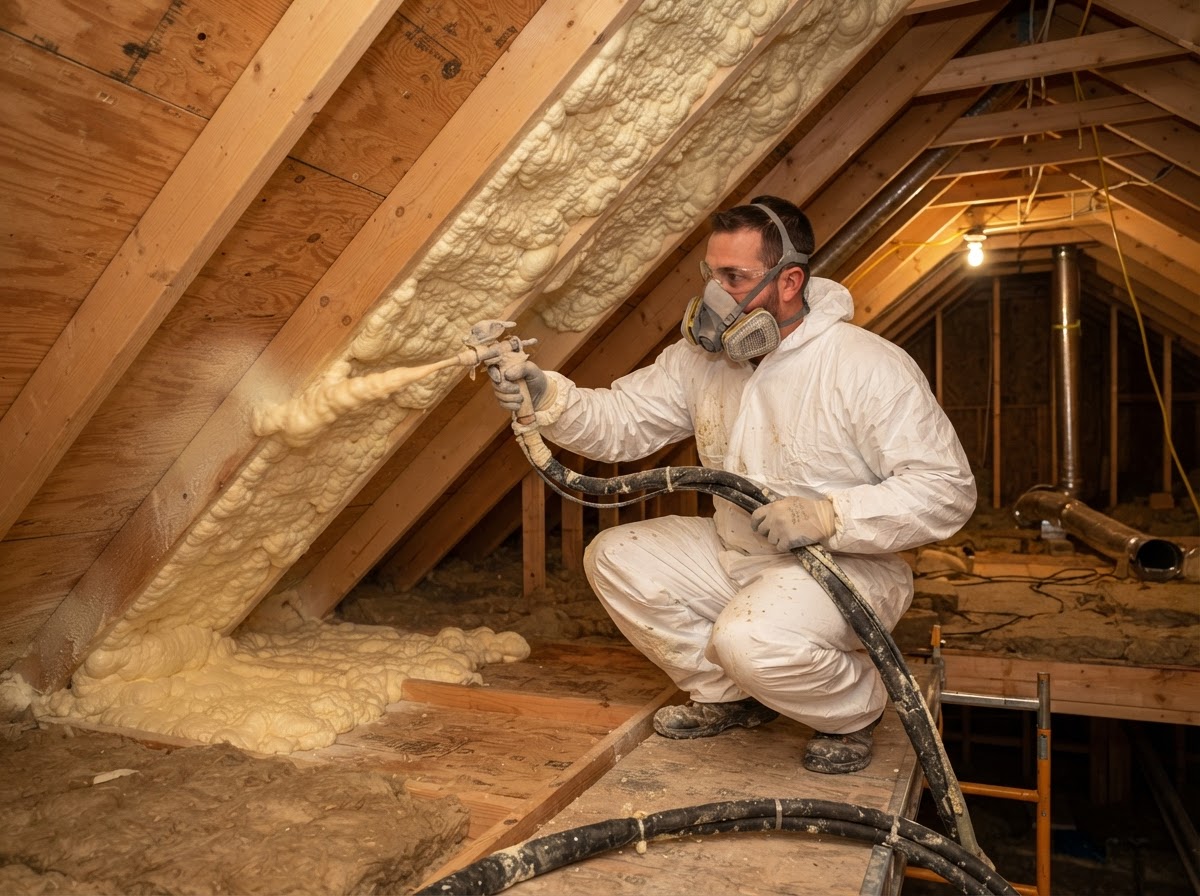
Exposed framing allows verified coverage across the whole envelope.
New Construction Applications Near Murfreesboro
New construction covers a range of building types. These are the applications and areas we handle for new builds across Murfreesboro and Rutherford County.
New Homes & Custom Builds
New homes and custom builds are insulated at the framing stage across walls, rooflines, and rim joists to establish the envelope before drywall.
Commercial Builds
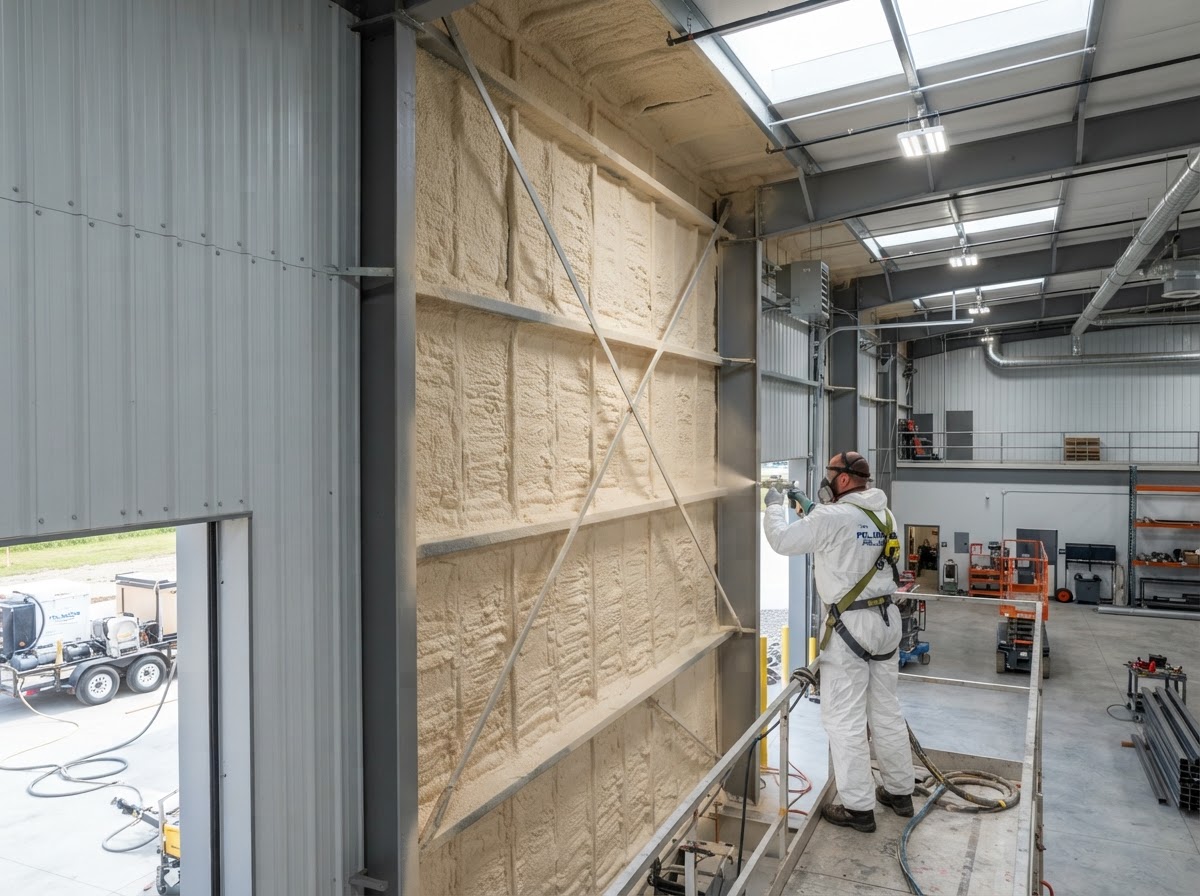
New commercial construction uses foam on roof decks, exterior framing, and metal assemblies, coordinated with the construction schedule.
Barndominiums
New barndominiums are insulated as a complete envelope—roof deck, exterior walls, and interior partitions—in sequence with the build.
Shops & Garages
New shops and garages are insulated at the framing stage, with the approach matched to whether the space will be conditioned or used as a workshop.
Wall Cavities & Roof Assemblies
Exposed wall cavities and roof assemblies are the core new-construction application, with foam verified across studs, rafters, and top plates.
Rim Joists & Penetrations
Rim joists and mechanical penetrations are sealed while accessible, addressing leakage points that are hard to reach once the building is enclosed.
Foam Selection and Construction Sequencing
In new construction, foam selection is matched to each assembly within the building. Open-cell may be used for interior wall cavities and roof decks where expansion and a vapor-open design fit; closed-cell may be used for rim joists, metal assemblies, or areas where moisture tolerance or limited depth matters. Both can appear in the same new build, applied to different assemblies.
Sequencing is coordinated with the build. Spray foam generally follows framing and sheathing and the mechanical and electrical rough-ins, and precedes drywall and interior finishes. We do not impose a rigid sequence—each project's timeline and the other trades on site shape the actual schedule, so the foam installation fits the construction flow.
| Consideration | Open-Cell Foam | Closed-Cell Foam |
|---|---|---|
| Wall Cavities | Fills stud bays, expansion | Denser, limited-depth cavities |
| Roof Assemblies | Roof deck, vapor-open design | Roof deck, moisture strategy |
| Rim Joists | Framing access, vapor-open | Common for rim joist sealing |
| Metal Assemblies | Interior only | Adheres to metal, condensation |
| Sequencing | After rough-ins, before drywall | After rough-ins, before drywall |
| Selection Driver | Assembly, depth, design | Substrate, moisture, depth |
General new-construction considerations; selection and sequencing are coordinated with the build schedule and adjusted per project.
Coordinated With Plumbing and Electrical
Spray foam is scheduled around plumbing, electrical, and mechanical rough-ins so that penetrations are accessible and the foam installation fits the construction sequence. We do not give rigid sequencing that could conflict with an individual project's requirements.
New Construction Projects in Murfreesboro
Murfreesboro and Rutherford County see steady new construction—custom homes, barndominiums, shops, and commercial builds—where planning the envelope at the framing stage sets the performance of the finished building. Middle Tennessee's climate makes a tight, well-sealed envelope a real advantage in a new build.
A new construction project starts with understanding the building type, the assembly design, and the construction timeline. We coordinate with the builder or developer, confirm where foam goes and which type fits each assembly, and schedule installation to fit the build sequence.
Discuss the building type, assembly design, and construction timeline with the builder or owner.
Confirm where foam goes—walls, roof, rim joists—and which type fits each assembly.
Coordinate timing with framing, rough-ins, and the other trades on site.
Apply the foam in sequence with the build and verify coverage before finishes.
New Construction Spray Foam FAQs
Spray foam is typically installed after framing and sheathing are complete and after mechanical and electrical rough-ins, but before drywall and interior finishes. Exact timing is coordinated with the build schedule and adjusted to each project rather than set to a rigid sequence.
Planning Spray Foam for a New Murfreesboro Build?
Tell us about your new construction project—the building type, assembly design, and timeline. We coordinate with the build and outline an appropriate new construction spray foam approach that fits the construction sequence.