
Cathedral & Vaulted Ceiling Spray Foam Insulation in Murfreesboro, TN
Cathedral and vaulted ceilings are sloped roof assemblies with little or no traditional attic above them, which leaves limited cavity depth for insulation. Murfreesboro Spray Foam Installation insulates cathedral and vaulted ceilings across Murfreesboro and Rutherford County, applying foam between the sloped rafters where conventional attic insulation does not fit. The shallow rafter depth is the defining challenge, and the foam choice follows that depth—open-cell or closed-cell is selected per assembly, not by a default. Existing finished vaulted ceilings require access to be evaluated before any retrofit.
Tell Us About Your Project
Share your building type and the areas you want insulated. We respond with project guidance.
What Cathedral & Vaulted Ceiling Spray Foam Addresses
A cathedral or vaulted ceiling is a ceiling that follows the slope of the roof, so the insulation goes between the sloped rafters rather than across a flat attic floor. There is little or no attic space above, which means the rafter cavity is the only room available for insulation. Spray foam fits these shallow cavities where conventional insulation may not, sealing the roofline as it goes.
Homeowners and builders in Murfreesboro research cathedral ceiling insulation when building a vaulted space, when an existing vaulted ceiling is uncomfortable, or when a remodel exposes the sloped rafters. The defining factor is rafter depth—shallow rafters leave little room, which shapes the foam choice.
This differs from a conventional attic because there is no attic floor to insulate. The roofline is the only boundary, so the work is always at the sloped rafters, and the limited depth is the central consideration in every cathedral and vaulted ceiling project.
Yes. Spray foam can be applied between the sloped rafters of a cathedral or vaulted ceiling, fitting shallow cavities where conventional attic insulation may not. The limited rafter depth is the defining factor in the foam choice, which is made per assembly rather than by a default.
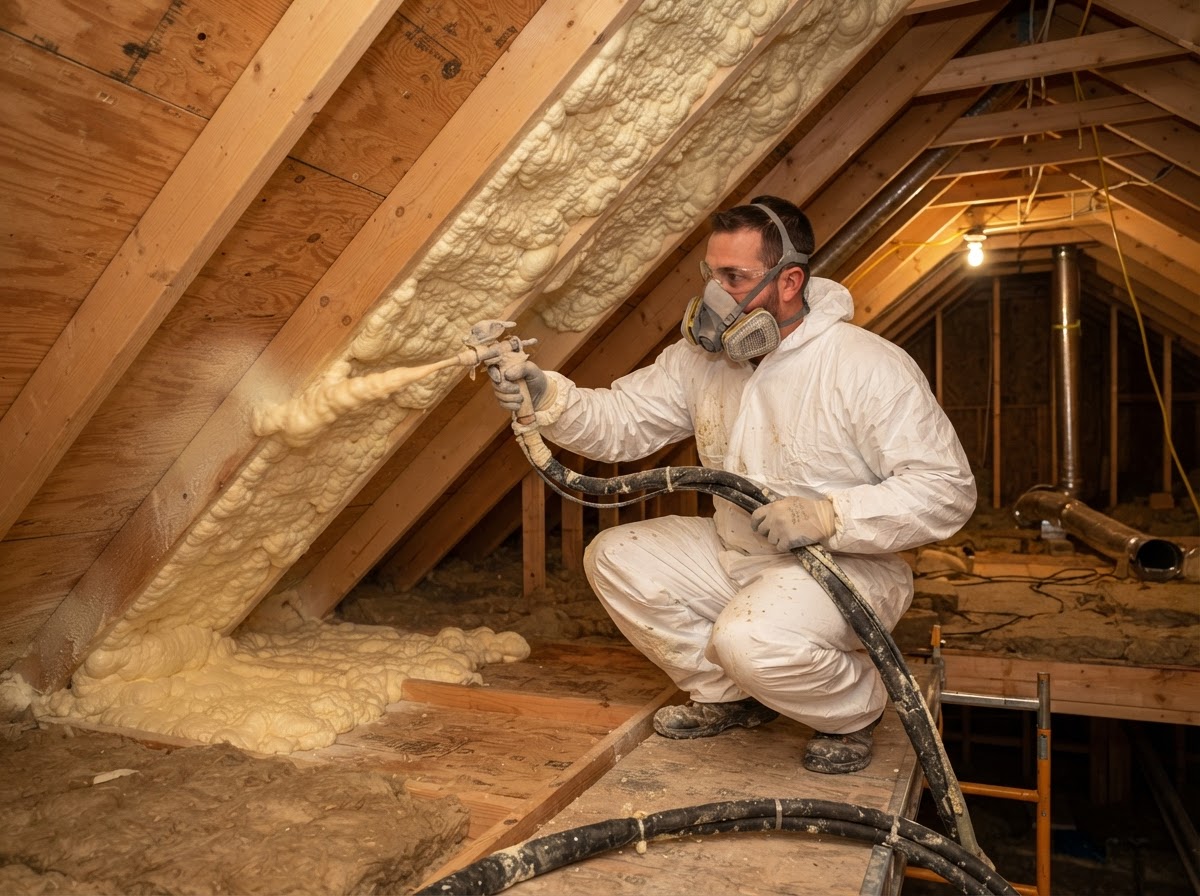
Foam fits shallow sloped rafter cavities where an attic floor does not exist.
Where Cathedral & Vaulted Foam Is Used
Cathedral and vaulted ceilings have a specific set of sloped cavities. These are the situations most often evaluated for Murfreesboro homes.
Sloped Rafter Cavities
Foam between the sloped rafters is the primary application, since the roofline is the only boundary in a vaulted ceiling.
Cathedral Ceilings
Cathedral ceilings that follow the roof slope are insulated at the rafters, with the rafter depth shaping the approach.
Vaulted Ceilings
Vaulted ceilings with limited space above are insulated at the roofline, where conventional attic insulation does not fit.
Limited Cavity Depth
Shallow rafter depth is the central challenge; foam is chosen for the limited space available in the sloped cavity.
New Construction
New vaulted construction plans foam into the rafter design before finishes, letting the shallow cavity be addressed from the start.
Remodels & Existing Access
Existing finished vaulted ceilings require access to be evaluated; a remodel that opens the slope is the typical retrofit opportunity.
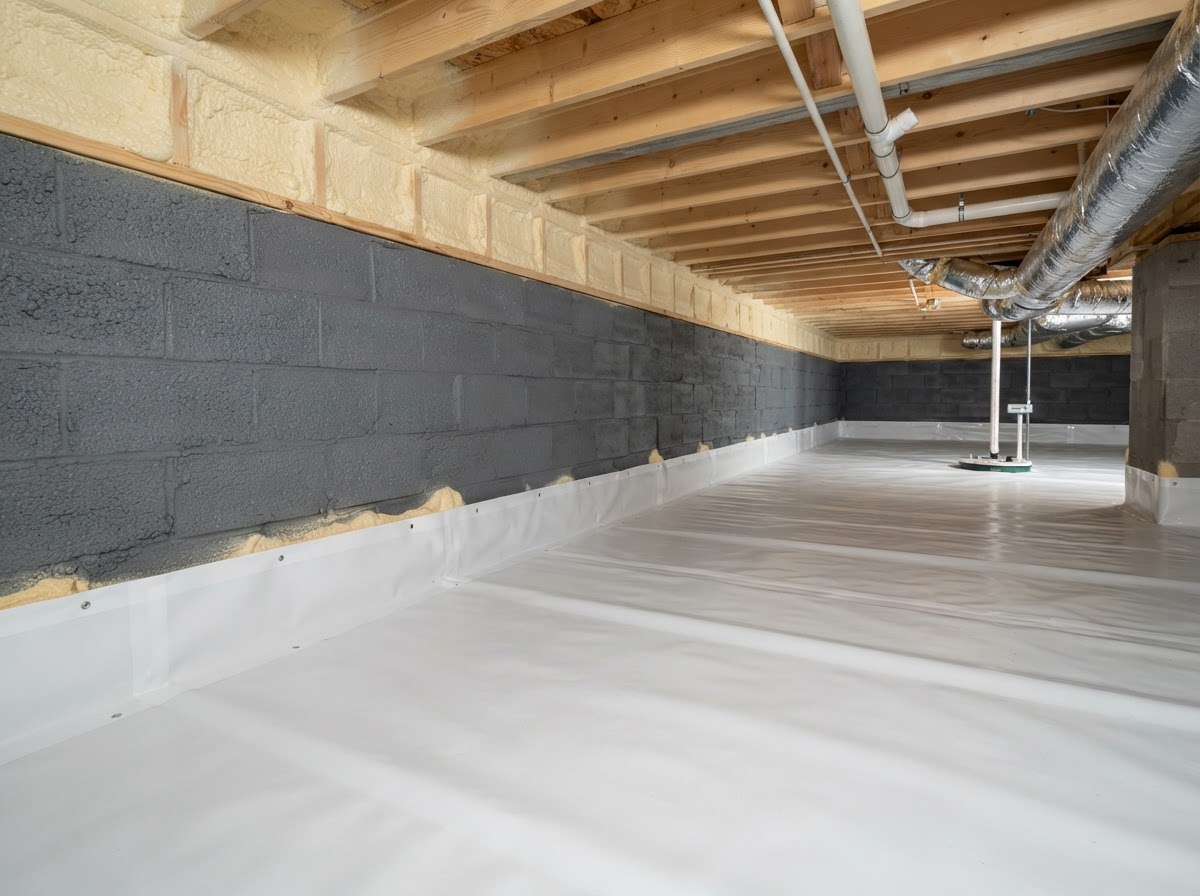
Foam Type & Sloped-Assembly Considerations
For shallow rafter cavities, closed-cell is often considered because it delivers thermal resistance in a thinner layer, which matters when depth is limited. Open-cell may be considered where the rafter depth is generous and a vapor-open assembly is appropriate. The rafter depth and the roof assembly—not a default—drive the choice.
Existing finished vaulted ceilings are the key access challenge. A finished ceiling with no access to the rafter cavities cannot be insulated without opening it, so a remodel that exposes the slope is the typical retrofit path. We evaluate access before recommending any approach for an existing vaulted ceiling.
| Consideration | Open-Cell Foam | Closed-Cell Foam |
|---|---|---|
| Shallow Rafters | Needs depth to expand | Thin layer, limited depth |
| Deeper Rafters | Expands to fill cavity | Dense layer if needed |
| Roof Assembly | Vapor-open design | Moisture-tolerant assembly |
| Existing Access | Finished ceiling limits access | Finished ceiling limits access |
| Selection Driver | Depth, vapor-open roof | Limited depth, access |
General cathedral and vaulted considerations; foam depends on rafter depth, assembly, and access.
Different From a Conventional Attic
A cathedral or vaulted ceiling has no attic floor—only the sloped roofline. That makes every project a roofline application, and the limited rafter depth is the central consideration. Conventional attic-floor insulation does not apply here.
Planning a Cathedral Ceiling Project in Murfreesboro
Cathedral and vaulted ceilings are common in Murfreesboro's custom homes and remodels, and their shallow rafter cavities are a frequent spray foam application. The conversation starts with whether the ceiling is new construction or existing, and what rafter depth is available. Murfreesboro Spray Foam Installation then reviews the sloped assembly and outlines a foam approach.
The evaluation reviews rafter depth, the roof assembly, and—critically for existing ceilings—whether the slope is accessible. From there we outline a roofline foam approach that fits the shallow cavity and the project's access.
Discuss whether the vaulted ceiling is new construction or existing and the rafter depth.
Review the sloped roof assembly and the ventilation design.
Evaluate access, since a finished ceiling may need opening for a retrofit.
Recommend a roofline foam approach suited to the shallow rafter cavity.
Part of Attic Spray Foam Insulation
Related Spray Foam Services
Cathedral & Vaulted Ceiling Spray Foam FAQs
Yes. Foam can be applied between the sloped rafters of a cathedral ceiling, fitting shallow cavities where conventional attic insulation may not. The limited rafter depth is the defining factor in the foam choice.
Ready to Discuss a Vaulted Ceiling in Murfreesboro?
Tell us whether your vaulted ceiling is new construction or existing and the rafter depth available. We review the sloped assembly and outline an appropriate spray foam approach for the cavity.