
Existing Home & Retrofit Spray Foam Insulation in Murfreesboro, TN
Retrofit spray foam insulation is about improving an existing building rather than starting from scratch—older Murfreesboro homes with settled fiberglass, drafty rooms, damp crawl spaces, or an attic that overheats in summer. Murfreesboro Spray Foam Installation handles attic roof-deck upgrades, crawl space retrofits, rim-joist sealing, additions, and remodels across Murfreesboro and Middle Tennessee. The defining constraint of a retrofit is access: what can be reached, and what the existing assembly allows, determines what's possible. We assess each existing home before recommending an approach, and we do not imply finished walls can always be filled without opening them.
Tell Us About Your Project
Share your building type and the areas you want insulated. We respond with project guidance.
Spray Foam for Existing Murfreesboro Homes
A retrofit is different from new construction because the building is already enclosed. The defining factor is access—whether the area being insulated is open, like an attic or crawl space, or finished, like an enclosed wall. Spray foam can be added to many existing homes, but the appropriate approach depends entirely on what can be reached and the condition of the existing assembly.
Homeowners in Murfreesboro typically consider a retrofit to upgrade an attic that overheats, seal a damp crawl space, address cold floors or drafty rooms, or insulate an addition or remodeled area where framing is exposed. The starting point is always an assessment: what insulation exists, what condition it's in, and what access the assembly allows.
We do not imply that finished walls can simply be filled with foam without opening them. Where a wall is enclosed and there is no access, options are limited; where framing is exposed during a remodel, a full spray foam approach is possible. The assessment determines what's realistic for each home.
Yes, spray foam can be added to many existing homes, particularly in unfinished or accessible areas such as attics, crawl spaces, and rim joists. The appropriate approach depends on access, the existing insulation, and the building assembly—finished walls cannot always be filled without opening them.
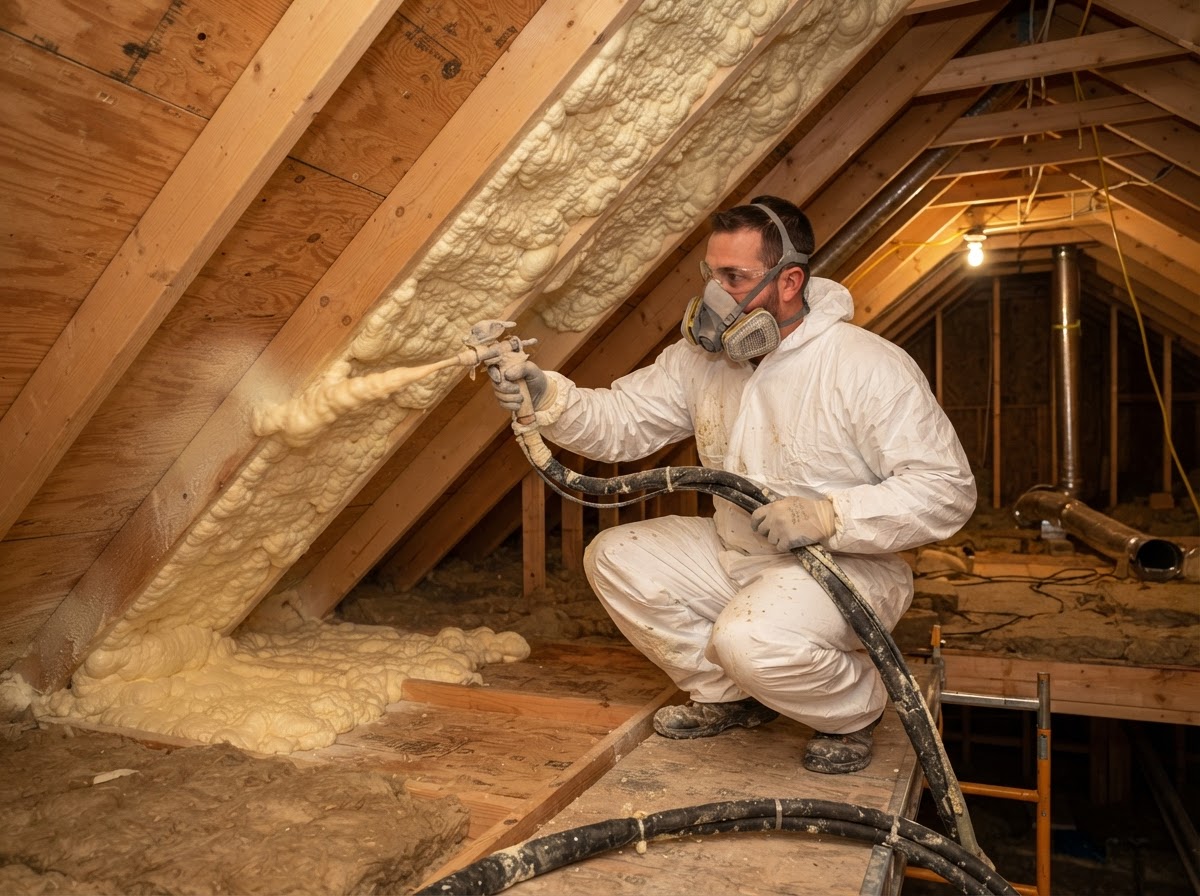
Open attics are the most accessible retrofit application for existing homes.
Retrofit Applications for Existing Murfreesboro Homes
Retrofits focus on the areas of an existing home that are accessible. These are the applications and constraints we evaluate across Murfreesboro and Rutherford County.
Attic Upgrades
An open attic roof deck is the most accessible retrofit, allowing foam to be applied to the rafters and bring the attic inside the conditioned envelope where the roof allows.
Crawl Space Retrofits
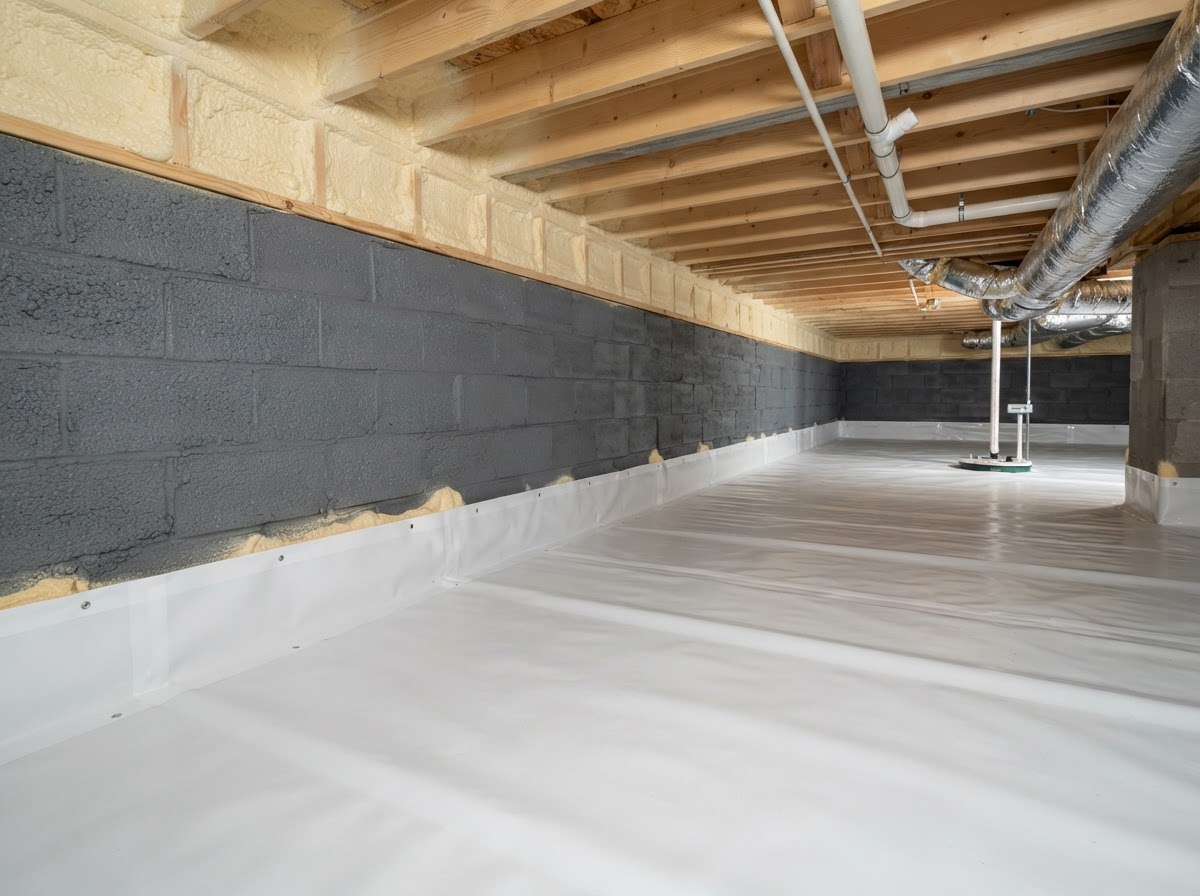
Rim joists, stem walls, and accessible subfloor areas can be sealed in existing homes, with moisture conditions reviewed before any insulation.
Rim Joist Sealing
Where the rim joist is accessible—in a crawl space or basement—sealing it limits the stack effect that pulls outside air into an older home.
Additions & Remodels
When walls or ceilings are opened during a remodel or addition, spray foam can establish a clean envelope in the new or modified space.
Existing Insulation Review
Settled, displaced, or moisture-affected fiberglass or cellulose is inspected; removal is recommended where the existing material is compromised.
Access Constraints
Finished, enclosed walls generally cannot be filled without opening the cavity; the assessment identifies which areas are realistically reachable.
Assessment Before Installation
A retrofit starts with assessment, not application. We review what insulation exists and its condition—settled fiberglass, displaced batts, moisture-affected material—and what access the assembly allows. Open attics and crawl spaces are the most common retrofit targets because they are reachable; enclosed finished walls are generally not, unless the cavity is opened during a remodel.
Foam type follows the assessment. Closed-cell may be chosen for crawl space and rim-joist areas where moisture tolerance matters; open-cell may suit an attic roof deck or an opened remodel cavity where expansion helps. The condition of the existing insulation—whether it stays or is removed—is decided as part of the review.
| Consideration | Open-Cell Foam | Closed-Cell Foam |
|---|---|---|
| Open Attic | Roof deck, expansion, vapor-open | Roof deck, moisture strategy |
| Crawl Space | Generally not first choice | Common for rim joists, stem walls |
| Opened Remodel | Fills exposed cavities | Denser layer, limited depth |
| Finished Walls | No access without opening | No access without opening |
| Existing Insulation | Reviewed, removed if compromised | Reviewed, removed if compromised |
| Selection Driver | Access, assembly, condition | Access, moisture, condition |
General retrofit considerations; the approach is determined by the assessed access, existing insulation condition, and building assembly—not assumed.
Finished Walls and Access
Finished, enclosed walls generally cannot be filled with spray foam without opening the cavity. We do not imply that walls can always be insulated in place. The assessment identifies which areas of an existing home are realistically reachable and which require opening during a remodel.
Retrofit Projects in Murfreesboro's Existing Housing
Murfreesboro and Rutherford County have a wide range of existing housing—older homes with settled insulation, mid-century builds with vented attics and crawl spaces, and homes undergoing renovations or additions. Middle Tennessee's climate makes attic and crawl space retrofits a common focus for existing homes dealing with comfort and moisture concerns.
A retrofit project starts with an assessment of the home—its age, the areas being considered, and the condition of existing insulation. We review access, identify what's realistic, and recommend a retrofit approach that fits the building's actual constraints rather than assuming every area can be treated the same way.
Discuss the home's age and the rooms or areas with comfort or moisture concerns.
Assess access—open attics, crawl spaces, rim joists, or opened remodel cavities—and existing insulation condition.
Identify what's realistically reachable and where the existing insulation should be removed.
Recommend a retrofit foam approach for the accessible areas and complete the application.
Related Spray Foam Services
Existing Home & Retrofit Spray Foam FAQs
Yes. Spray foam can be added to many older homes, particularly in accessible areas such as open attics, crawl spaces, and rim joists. The appropriate approach depends on the home's construction, access, and the condition of any existing insulation—older homes are assessed before any recommendation.
Looking to Upgrade Your Existing Murfreesboro Home?
Tell us about your home's age, the areas with comfort or moisture concerns, and whether any remodel is planned. We assess access and existing insulation and outline a realistic retrofit spray foam approach.